Blackboard / UX practice
Make UX a cross-functional practice.
Co-creating design principles, connecting UX with product and engineering, and building mentorship and shared-learning practices at Blackboard.
- My role
- User Experience Architect
- Context
- Blackboard
- Scope
- Product design and practice development
- Status
- Earlier work
The operating problem
Make design part of how the team works.
Students and educators used a product shaped by many teams. Design, product management, engineering, and QA needed a shared way to discuss whether an experience was clear, useful, and consistent.
My work combined interface and design-system contributions with the working habits around them: design principles, cross-functional collaboration, mentorship, and recurring discussions among designers.
My contribution
Create shared language and working habits.
I co-created Blackboard’s design principles and contributed to reusable interface guidance and design-system work. The principles gave product, design, engineering, and QA a common vocabulary for discussing the experience.
I brought product managers and engineers into research and testing, supported mentorship, and organized monthly brown-bag discussions connecting designers across groups, including product development and marketing. These were practical ways to share knowledge beyond a single product team.
Historical artifact / Blackboard user experience
The principles made the design intent explicit.
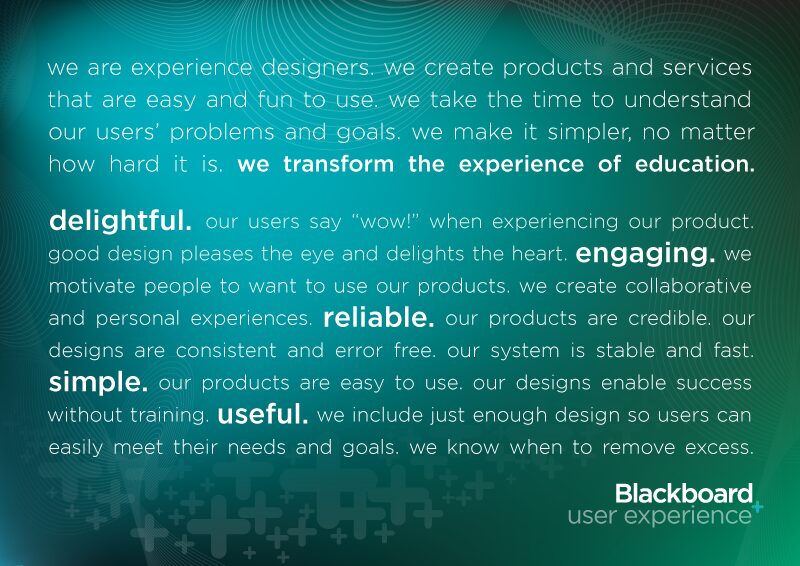
The artifact describes five qualities: delightful, engaging, reliable, simple, and useful. Its emphasis on helping people accomplish their goals without excess makes the culture-building contribution more concrete.
For example, “simple” and “useful” give a team language for discussing whether an interface includes what a person needs and whether it demands unnecessary learning. That is an explanation of the principles, not a claim that the graphic by itself changed product performance.
View full artifact image →Choices in the work
Three connected decisions.
Give design discussions a shared vocabulary
Co-create principles such as simple, useful, and reliable so partners can discuss the experience in terms of the people using it.
Connect research and delivery
Involve product managers and engineers in research and testing, then carry that understanding into shared product workflows and interface guidance.
Create recurring opportunities to learn
Use mentorship and monthly brown-bag discussions to connect designers across organizational groups rather than rely only on informal exchanges.
Evidence and limits
Principles, shared guidance, and learning practices.
The principles artifact and the accompanying account show a contribution to shared design language, product collaboration, and team learning. The work was collaborative; it was not a single person’s creation of an organizational culture.
The artifact does not establish a measured reduction in clicks, support demand, or delivery time.
Reflection
Culture is expressed in repeated decisions.
Principles matter when people can use them in their work. Shared language, relationships, and opportunities to learn help make design a continuing part of product decisions.
Discuss this work: rob@robfay.com