Job seekers
Applications could require repeated information, while unclear status and next steps made it difficult to know what was happening.
Try Allegis or ResearchOps.
Allegis / Commercial product leadership
Research and product design for Allegis Connected: linking job seeker needs, recruiter workflows, and the handoffs around a new assignment.
My contribution
I led research and product design for Connected. Cross-role workshops brought job seekers, recruiters, and hiring managers into journey mapping so product partners could examine needs and gaps together.
I developed service blueprints and visual artifacts to support roadmap discussions, then translated research into mobile and desktop designs. Sketches, wireframes, and clickable prototypes made proposed workflows concrete for cross-functional review.
The product and service problem
Applications could require repeated information, while unclear status and next steps made it difficult to know what was happening.
Disconnected tools, limited pipeline visibility, and manual follow-up made coordination part of the experience problem.
They needed clearer tools and information to support hiring decisions and the transition into an assignment.
Cross-role journey mapping brought those needs into the same discussion. I used service blueprints and visual artifacts to connect the visible interactions with the people and work needed to support them.
One consequential handoff
A candidate needs to know where to go, what to complete, and whom to contact. The recruiter has a corresponding responsibility for information, onboarding, and follow-through.
These two perspectives belong in the same conversation. The comparison shows a service relationship rather than treating the talent-facing product as an isolated screen.
Paired artifact detail / Same transition, different responsibilities
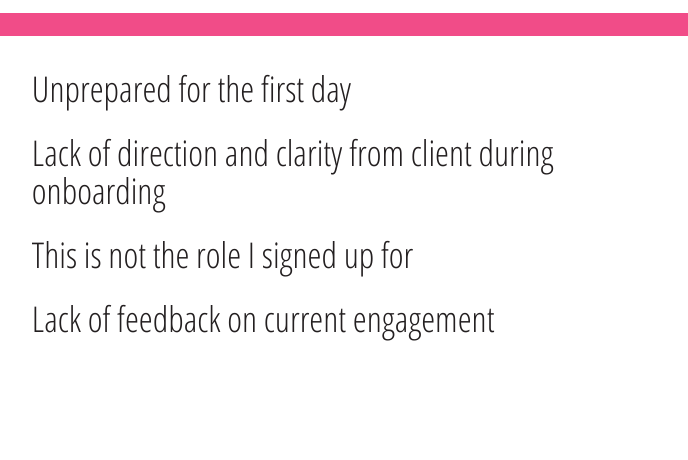
Excerpt · Allegis Group / 7Summits
Selected wording from the artifact:
The human need: understand what happens next and get support without having to discover the service structure alone.
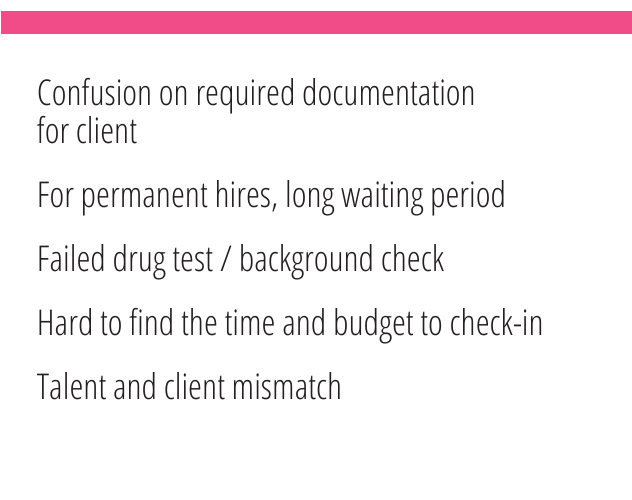
Excerpt · Allegis Group / 7Summits
Selected wording from the artifact:
The service responsibility: make onboarding information and follow-through part of the supported workflow.
Evaluate the handoff across roles, channels, and ownership. A local improvement needs to support the whole transition.
Interpretation of the paired artifacts, not evidence of a measured improvement.
From research to product design
My contribution continued beyond the journey maps. I translated research into sketches, wireframes, and branded clickable prototypes for mobile and desktop. The fidelity changed with the question: enough detail to discuss requirements, examine a proposed workflow, and review it with cross-functional partners.
Co-created journeys and service blueprints made needs, gaps, and handoffs visible for roadmap discussions.
Mobile and desktop proposals made workflows concrete enough to examine together rather than leave the requirements in an abstract description.
The paired excerpts above show the onboarding concerns. This account does not claim they establish the measured effect of a specific interface change.
What the evidence shows
The documented work includes co-created journey maps, service blueprints, and mobile and desktop prototypes. These artifacts connected research with experience priorities and product-design discussions.
This account focuses on the research and design contribution. The artifacts show how proposals were developed; quantified customer or business impact is not established here.
A shared view of the journey gives product partners a way to discuss consequences across roles. The value of an interface decision depends on the handoff it creates as well as the task it simplifies.
Discuss this work →